AI’s Next Constraint May Come From the Power Grid
The expansion of compute is turning data centers from a digital-infrastructure issue into an energy-system challenge.
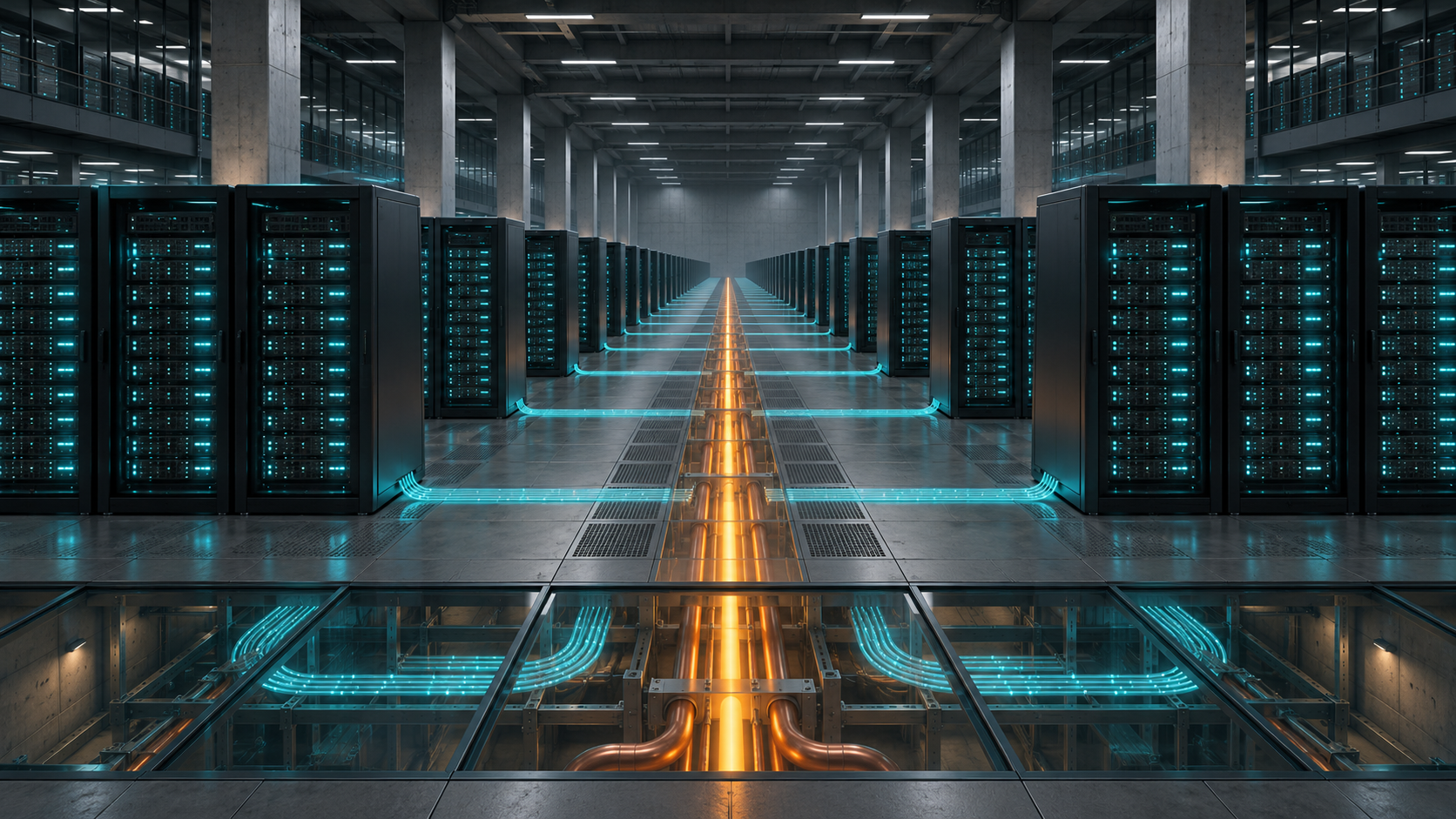
Generative AI has pushed data centers to the center of the energy debate. Chips determine the performance of individual systems, but large-scale compute can be deployed only when power systems can provide electricity on time, reliably, and at an acceptable cost.
How quickly is demand growing?
A 2024 report released by the US Department of Energy found that electricity use by US data centers rose from 58 TWh in 2014 to 176 TWh in 2023, or about 4.4% of total US electricity consumption that year. The report estimated that demand could reach 325–580 TWh by 2028, representing roughly 6.7%–12% of total US electricity use.
These figures are a forecast range, not a fixed outcome. The pace of growth will depend on chip efficiency, model training methods, inference demand, construction timelines, and the availability of grid connections.
The compute race becomes an infrastructure race
AI infrastructure discussions once focused primarily on GPU counts and network bandwidth. Site selection, transmission, storage, cooling, and interconnection schedules are now just as important. Without timely access to power, even the most advanced servers remain construction plans rather than usable capacity.
Efficiency means more than using less electricity
Efficiency gains can happen at several layers: more efficient semiconductors, better model and inference architectures, improved cooling, and shifting some workloads to periods of lower grid stress. With on-site generation and storage, data centers may also become flexible loads under the right operating conditions.
The questions that actually need answers
The future is not a simple choice between AI and energy. The harder questions concern who pays for new infrastructure, how grids are planned, whether clean generation can expand alongside demand, and whether local communities receive measurable benefits from new projects.
Source: US Department of Energy, “2024 Report on U.S. Data Center Energy Use”. Forecasts are ranges and remain subject to uncertainty.